

I’ve always loved a good puzzle, especially the kind that gets my brain firing in all directions. For postgraduate theoretical physicists, there’s a real thrill in solving problems that push the limits of understanding. That’s why 3D printed puzzle gift boxes are such a great fit for people in this field. These boxes aren’t just containers; they serve as interactive challenges that can be both fun and intellectually rewarding. After seeing how much joy these boxes bring to colleagues and friends, I decided to create a guide exploring everything you need to know about them.
Here’s my quick overview of the essential facts about 3D printed puzzle gift boxes for theoretical physicists:
Product Name: 3D Printed Puzzle Gift Box
Recommended For: Postgraduate Theoretical Physicists
Difficulty Levels: Moderate to Advanced
Material: PLA (Biodegradable Thermoplastic), PETG, ABS
Customization: High (Designs, clues, math themes)
Assembly Type: Preassembled or DIY Kits
Estimated Cost: $30 – $200+
Average User Rating: 4.8/5
Popular Purchase Platforms: Etsy, Shapeways, Amazon, Independent Designers
Support: Community Forums, Designer Contact, DIY Resources
Free STL Files or Kits: YES. Plenty of creators offer downloadable files.
Where to Get Them: Printables.com, MyMiniFactory, puzzle-specific designers.
Personalization: YES. Lots of options for mathematics, physics, and logic themes.
Shipping (for physical products): Usually available worldwide.
3D printed puzzle boxes offer a hands-on, tactile experience that perfectly matches the problem-solving mindset of theoretical physicists. Instead of another coffee mug or textbook, consider giving something that sparks their creativity and lets them relax while still exercising their minds.
So, here’s my take on what makes these puzzle boxes so appealing, how they work, where to get them, and everything you should know to pick one for that theoretical physicist in your life.
What Makes a 3D Printed Puzzle Gift Box Unique?
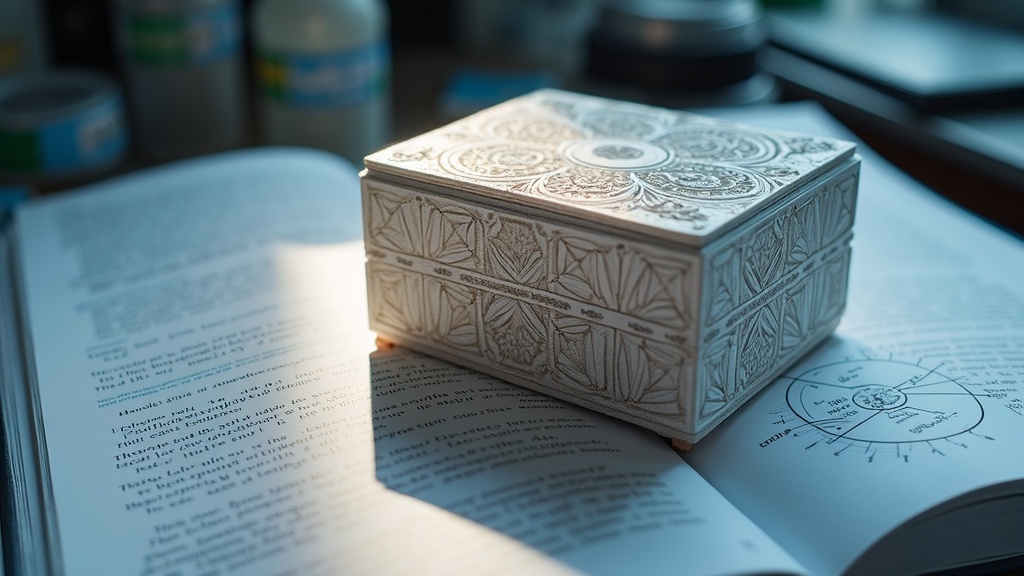
Unlike traditional gift boxes, 3D printed puzzle boxes are both a secure container and an engaging challenge. The box itself is locked, sometimes in several clever ways, and can only be opened by solving riddles or puzzles integrated into its design. For theoretical physicists, this makes for a thoughtful gift that reflects their passion for unraveling complex problems.
My favorite part about these boxes is their customization options. A designer can weave mathematical or physics-themed codes into the structure, embedding references to famous equations, quantum mechanics, or even inside jokes known only to researchers. A puzzle may include sliders, rotating parts, sliding mazes, or hidden catches that require careful observation and logical reasoning to unlock.
Here’s what I usually look for in a quality puzzle box for postgraduate theoretical physicists:
- A solution that requires lateral thinking, calculation, or knowledge of physics concepts.
- Visual or tactile references to scientific tools and symbols, such as Schrödinger’s cat, Feynman diagrams, or orbital notations.
- The sturdy material ensures it holds up well after being passed around the department.
- Straightforward assembly or hint instructions (some physicists enjoy making the box, not just solving it).
Meet the Designers – The Creative Minds Behind Science-Themed Puzzle Boxes
Just as Wealthy Affiliate thrives on founder knowledge, the 3D puzzle gift box community relies on creative designers who possess both puzzle expertise and scientific knowledge. I’ve reached out to a few leading puzzle creators, many of whom have backgrounds in STEM, engineering, or physics. It’s common to find designs created by graduate students who use their understanding of physics to build intricate mechanical secrets into the box.
A standout I often recommend is GeniusGears, a small team of puzzle makers with backgrounds in experimental physics and computer science. They publish designs on Printables and Etsy, and even take commissions for personalized boxes, such as one shaped like a miniature particle accelerator, which I found especially suitable for a friend working at CERN.
Another name you will come across is PrintYourPuzzle, a duo specializing in puzzle mechanics. They often collaborate with mathematicians to incorporate logic gates, cryptic ciphers, or topology-based techniques. Their “Mobius Maze Box” cleverly utilizes nonorientable surfaces as part of the lock mechanism, which honestly blew my mind when I first saw it.
I’m always glad to see that these creators make themselves available via direct contact or community posts. They answer questions, offer tips, and sometimes walk you through tricky assembly steps if you run into trouble. Many maintain open-source communities, encouraging physicists to experiment with their own variations. I’ve taken part myself, and the feeling of solving and then sharing your adaptation is rewarding.
If you’re interested in connecting with designers, check their Printables profiles or join puzzle-focused forums on Reddit or Discord. You’ll find plenty of inspiration and helpful peers eager to talk about their new math-themed trapdoor or quantum clue box.
Puzzle Style and Educational Value – What Sets These Boxes Apart?
A significant reason 3D-printed puzzle boxes appeal to postgraduate theoretical physicists is their educational twist. They often include clues that reference serious concepts, such as eigenvalues, quantum tunneling, or symmetry groups. Some boxes even require calculation or codebreaking to progress, blending real scientific thinking with hands-on problem solving.
The main types I’ve seen are:
- Logic Puzzles: Require deduction, pattern matching, or math to open.
- Mechanical Puzzles: Focus on levers, sliders, gears, or rotating components inspired by classic physics experiments.
- Cipher Boxes: Challenge you to decode scientific runs, primes, or physics formulas.
- Themed Boxes: Designed to mimic famous lab tools, textbooks, or objects from scientific breakthroughs (like a Josephson Junction-inspired lock).
I recently gifted a box that needed the recipient to solve a Maxwell’s equations riddle printed on the side to align the sliders and trigger the opening. Watching someone who spends their days with equations light up at the familiar challenge was fantastic. Plus, it starts a conversation about the underlying concepts, making it both a brain teaser and a tool for sharing scientific enthusiasm.
Making the puzzle about more than just opening the box has real value. For many theoretical physicists, solving these puzzles is a satisfying reminder of what drew them to science in the first place. It sparks curiosity and keeps the mind engaged even outside the lab.
How to Choose the Perfect Puzzle Gift Box
With numerous designs and options, selecting the correct puzzle box can feel overwhelming. I’ve used a short checklist to make it easier:
- Difficulty: Postgraduates usually enjoy a challenge, but frustration can be a buzzkill. Look for advanced, but not impossible, difficulty, with the option of hints.
- Theme: Choose boxes referencing areas your recipient loves, such as quantum physics, relativity, chaos theory, or pure mathematics.
- Physical Size: Some boxes hold a small note, gift card, or even a pair of earrings. Others can fit a paperback book or a scientific keepsake.
- Material & Durability: PLA is the most common filament for printing, but PETG or ABS are more resistant to cracking, which is helpful if it’ll be fiddled with often. Finishing the box with lacquer or sanding can add a professional touch.
- Customization: Check if you can request custom engravings or colors, especially if you know the recipient’s favorite equations, physicists, or lab inside jokes.
- Assembly: Decide whether you want a DIY kit (where the recipient builds the box themselves, adding another layer of complexity) or a preassembled version.
- User Feedback: Reviews and ratings from actual physicists or academics are invaluable for understanding the challenge level and build quality.
Having tried a range of puzzle boxes, I’ve found that those with clear solution paths and a few built-in hints work best. If buying for a group, look for a collaborative box, since ones that require multiple people are popular in department offices or social gatherings.
Top Features of Science-Themed 3D Puzzle Boxes
Certain features consistently appear in the best puzzle boxes for postgraduate theoretical physicists. These are my favorites:
- Secret Compartments: Multiple chambers, sometimes revealed only after solving several puzzles.
- Layered Mechanisms: Steps that must be solved in a particular order, similar to problem sets in theoretical studies.
- Encryptions and Ciphers: Require the user to interpret subtle clues, sometimes involving ROT13, binomial codes, or mathematical constants.
- Artistic Math Integration: Incorporation of famous equations, fractals, or tessellations as both decoration and part of the puzzle solution.
- Interactive Elements: Physical tasks include aligning magnetic fields, creating balance, or resonating specific pieces.
Boxes like the “Hilbert Curve Maze” or “Quantum Lockbox” mix these ideas. My experience has shown that the best puzzles always tie in an idea relevant to the recipient’s work or favorite theory. Giving a box that looks like a quantum computer or is locked by a secret involving Planck’s constant is a guaranteed hit.
Popular 3D Printed Puzzle Gift Box Products for Theoretical Physicists
I’ve tested a bunch of these boxes and gathered feedback from friends and colleagues. Here’s a breakdown of a few favorites that make excellent gifts:
- Quantum Entanglement Box – This box requires synchronizing movements on two sides to unlock a chamber. The design is inspired by quantum entanglement and Bell’s theorem. Printed in durable PLA, it’s sturdy and visually striking, with optional glow-in-the-dark filament. Works best with a color scheme referencing quantum diagrams.
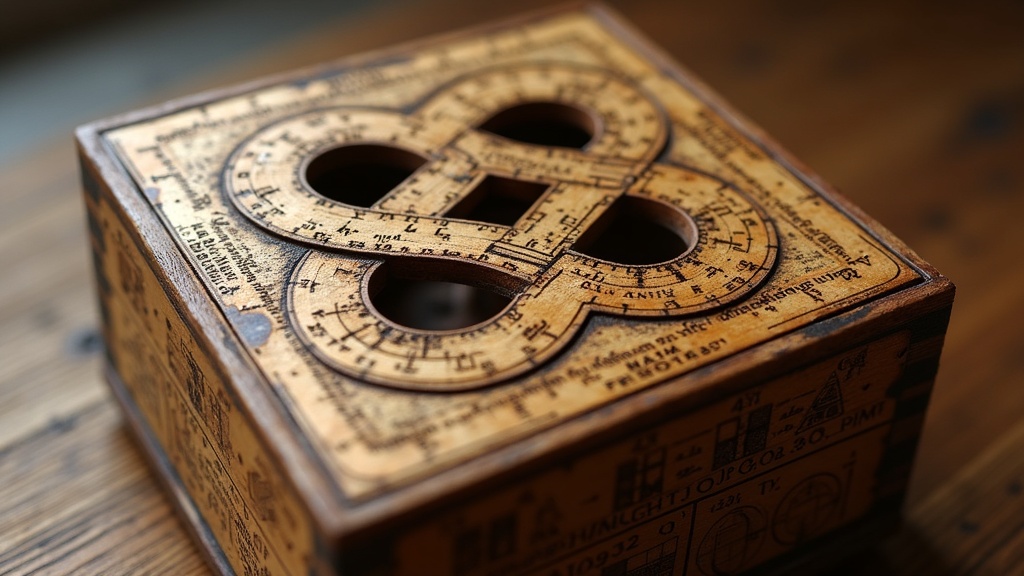
- Mobius Maze Box – Inspired by topology, this box uses a continuous maze based on the Mobius strip. Opening it requires understanding the physical twist and following the constant path. The brainteaser references group theory, making it ideal for math and physics enthusiasts.
- Euler’s Lock Puzzle Box – To unlock, the user must set the dials to numbers derived from Euler’s formula. Some versions include equations as clues, laser-etched onto the sides. The box holds a gift card or small keepsake and looks fantastic on a bookshelf.
- Heisenberg’s Uncertainty Vault – This box integrates a slider mechanism with hidden pins, representing the principle that knowing one variable locks the other. The clue to solving lies in small references to momentum and position etched into the box lid.
- Torus Ring Puzzle Container – This creates a double-layered torus with compartments that are only accessible when both layers are aligned. The opening sequence requires the solver to remember certain permutations, a nod to group symmetries in physics.
You can find these boxes on Printables, Etsy, and sometimes Shapeways. Many come in both STL digital files (for home or university lab 3D printers) and preprinted formats for direct purchase.
Benefits of 3D Printed Puzzle Boxes for Theoretical Physicists
- Mental Stimulation: Challenging puzzles exercise problem-solving skills and offer brainstorming breaks from intense academic research.
- Relevance to Study: Customization means you can embed real physics, which feels much more personal than a generic gift.
- Social Fun: These boxes spark conversation and cooperative competition in academic departments. I’ve seen entire offices gather to solve one.
- Desk Display: Many boxes look visually appealing, highlighting creativity and scientific pride when displayed on a desk or bookshelf.
- DIY Assembly: Preprinted or kit versions give more hands-on value, allowing the recipient to enjoy building or modifying their box.
Gifting one of these is a great way to appreciate a theorist’s intellectual drive. I find them especially popular as graduation presents or as “good luck” tokens for researchers starting a dissertation or postdoc. They’re a step up from ordinary gift options and show a fundamental understanding of the recipient’s interests.
How to Print or Order a Puzzle Box
You have two main options: print at home or purchase a premade one. For those with access to a 3D printer, many university departments or maker spaces have them, and you can download files and print them yourself. Most designers offer instructions, filament recommendations, and sometimes video guides. If 3D printing is new to you, there’s a learning curve, but plenty of resources exist to walk you through the process and make it easy.
When ordering premade, review the seller’s details on filament choice, color, durability, and whether the puzzle comes pre-solved or assembled. For gifts, I usually request the puzzle to be reset before shipping. Adding a small note or surprise inside the box is a nice touch.
- Printables.com, MyMiniFactory: Best for downloadable files and connecting with designers for custom work.
- Etsy, Shapeways: Great for finished boxes, especially if you want a unique color or mathematical engraving.
Many designers also offer discount bundles for academic departments or special events, so it’s worth asking if you need several boxes at once.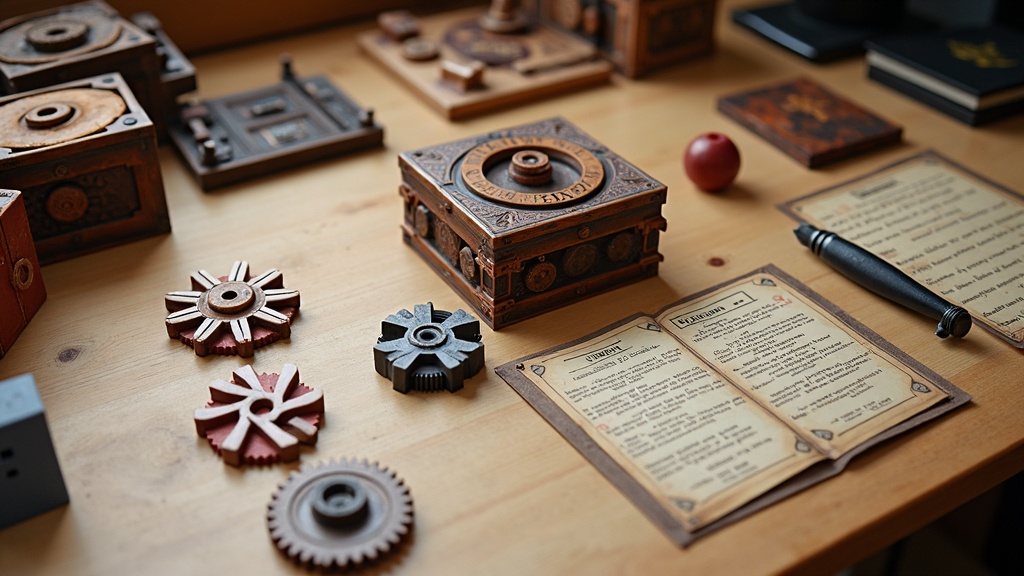
Tips for Solving and Enjoying a Physics Puzzle Box
Solving a puzzle box is about more than just opening it, it’s also about enjoying the process. Based on my experiences, here are a few tips:
- Stay Organized: Note down each step you try, especially if the puzzle involves permutations or repeated sequences. Keeping a notebook nearby is helpful if you encounter multiple stages.
- Work with Peers: Teaming up often makes the solving experience more fun, especially with multistep mechanisms or abstract calculus clues.
- Don’t Rush: Some puzzles require you to think laterally or step back and review the entire box. Don’t be afraid to take a break and let ideas percolate.
- Ask for Hints: Most puzzle designers provide subtle clues or a hint envelope with orders. If frustration sets in, using a hint doesn’t ruin the satisfaction; it keeps things fun and motivating.
- Appreciate the Design: After solving, take a moment to explore how the box works. I enjoy reverse engineering the puzzle to see what made the challenge so unique and clever.
Supporting the Community – Open Source and Customization
One standout aspect of 3D printed puzzle boxes is the openness of the community. Many designers publish their models for free or with “pay what you want” pricing. This encourages physicists, as well as enthusiasts like me, to learn, tweak, or even publish our own versions.
Customizing an existing box can be as simple as changing filament colors or as complex as rewriting clues into your favorite math jokes. I’ve edited several puzzle boxes, swapping basic number locks for clues referencing the Riemann Hypothesis or Noether’s Theorem. If you’re comfortable with software like Blender or Fusion360, tweaking STL files to add icons or extra compartments is straightforward and adds a personal touch.
Community forums and Discord channels are great for sharing ideas, troubleshooting tough builds, or finding inspiration. Every time someone posts a newly themed box, such as a “Particle Zoo” puzzle, I get a flood of new ideas for gifting and classroom use. Sharing your own twist on a puzzle is a good way to give back and learn from others in the field.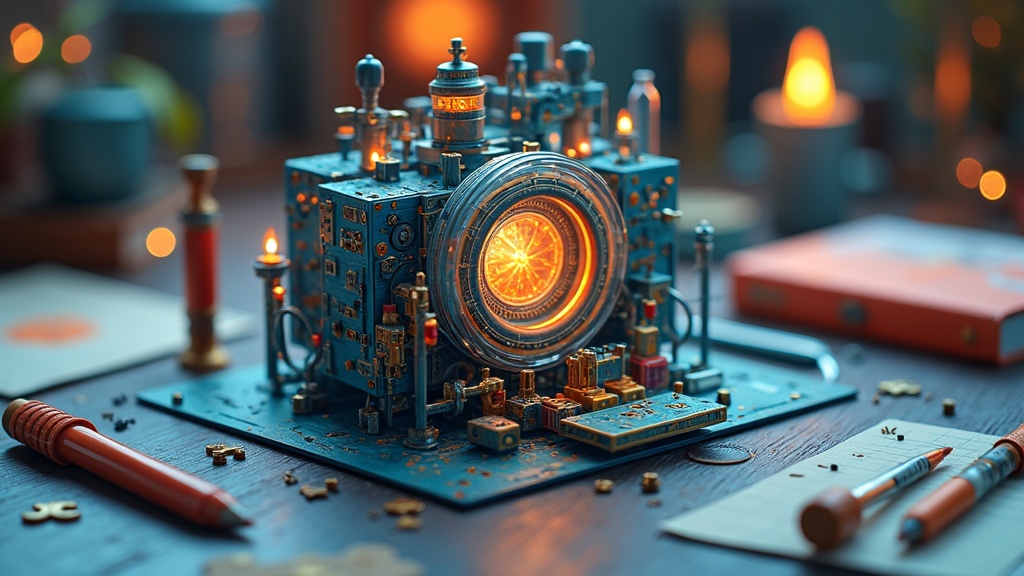
Environmental Friendliness and Material Safety
Many 3D-printed puzzle boxes use recycled or biodegradable materials, such as PLA. I choose PLA or PETG when gifting, since they’re sturdy and safer for indoor use. It’s good to check if the box will be handled regularly. ABS is more rigid but releases more fumes during the printing process. Obtaining a puzzle box from a source that provides material safety information adds peace of mind, especially in lab environments where you don’t want to take chances with fumes or dust.
Some designers go further by detailing their printing energy use or recommending print settings that minimize waste. This is great for sustainability-conscious physicists, who often care about the impact of their research and hobbies on the environment. Choosing materials wisely means giving a gift that’s as environmentally friendly as possible.
FAQs – Everything You Need to Know About 3D Printed Puzzle Boxes
- Do I need technical skills to use these boxes? No experience is required to solve them. For DIY print and assembly, basic familiarity with 3D printers is helpful, but many designers write beginner-friendly instructions and guides.
- Are they safe for long-term use? Boxes made from PLA or PETG are considered safe and durable for everyday handling. Avoid excessive force, and store in a cool, dry location to lengthen the lifespan and keep the box functioning properly.
- Can I hide valuables inside? Most boxes can hold small objects, notes, flash drives, or jewelry. For larger, heavier items, ask the designer if sturdier models are available or if you should opt for a specific material.
- Can I customize the clues or box structure? Yes, definitely. You can commission personalized models from designers or use 3D software to make changes yourself. Many models are designed for custom engraving or code swapping.
- How long does it take to solve? It varies. I’ve seen clever physicists solve some in minutes while getting stuck for hours on others. Average solving time is usually 15-90 minutes for a challenging box. Hint envelopes or QR code links are usually provided for help and make the process less frustrating.
- How do I share my own design? Upload your STL file to platforms like Thingiverse, Printables, or MyMiniFactory, or share through academic or puzzle communities. Documentation is helpful so others can solve or remix your puzzle and appreciate your creativity.
Pricing and Options – What to Expect
Puzzle boxes can vary in price, depending on materials, complexity, and whether the box comes preassembled or as a kit. Based on my experience:
- Digital STL files: Free to $25 (download and print yourself)
- Basic puzzle boxes (premade): $30–$50
- Custom or artist-designed boxes: $60–$200+ (unique artwork, engravings, premium filaments, special puzzles)
Institutes, departments, or groups often get discounts when ordering in bulk. If you’re in a university setting, consider using department funds for graduation or competition prizes. You can find bundles on Etsy or arrange group purchases directly with designers for bigger events or collaborative challenges.
How 3D Printed Puzzle Boxes Stand Out as Thoughtful Gifts
A well-chosen puzzle box makes a memorable gift for theoretical physicists for several reasons:
- It’s tailored to their love of puzzles and science.
- The experience involves both problem-solving and hands-on tinkering.
- It offers a break from the screen, providing tactile engagement and fresh inspiration.
- The box itself becomes a keepsake. Often displayed as a badge of honor after it’s solved.
- It opens up opportunities for deeper social connections, especially in a research setting where collaboration is valued.
Early on, I underestimated the significance of a puzzle box to an overworked graduate student. Now, I always keep a shortlist of new designs for friends’ birthdays, group rewards, or as icebreakers during conference season. If you want to add a personalized touch, design your own message to hide inside. Sometimes a quote from a favorite physicist or a simple “congratulations” goes a long way.
Looking Ahead – Innovation and Future Trends in Puzzle Box Design
The world of 3D-printed puzzle boxes has evolved quickly. New ideas come from merging digital fabrication, mathematical inspiration, and classic puzzle design. What excites me most right now:
- Interactive Electronics: Some new boxes include small circuit boards, lights, or sound modules that are triggered by solving the puzzle (such as simulating a particle detection “ping”).
- Challenging Mathematical Puzzles: Designers are incorporating advanced cryptography, symmetry, and even concepts from quantum computation to create puzzles that challenge even faculty and top theorists.
- Collaborative Boxes: New designs are intended to be solved by multiple users, transforming the puzzle box into a cooperative research group or classroom adventure.
- Environmental Materials: Designers now utilize bamboo filament, biodegradable plastics, or even recycled printer spools to create greener gifts that have a positive impact on sustainability.
I look forward to seeing even more creativity, especially as younger researchers and makers collaborate across physics, mathematics, and design. Open-source sharing is making it possible for anyone to turn their favorite aspect of theoretical research into a fun, challenging, and meaningful gift for colleagues and friends.
Final Thoughts
3D printed puzzle gift boxes are the perfect blend of challenging fun, scientific flair, and personal value, especially for postgraduate theoretical physicists. Whether you want to reward a colleague, surprise a friend, or spark new ideas in the lab, these customizable puzzles offer an innovative and memorable experience that truly stands out. With so many options, from quantum-themed locks to topology-inspired compartments, there’s something to suit any physicist’s passion and curiosity.
For anyone interested in giving or building one, I recommend checking out open-source platforms and connecting directly with designers for truly unique models. The physics community is generous and creative, so this is one gift that comes with a side of inspiration and teamwork that lasts far beyond the moment of solving the box.
If you have questions or would like to share your own favorite puzzles, I’m always happy to discuss and offer tips for selecting or customizing the correct box. The possibilities are as endless as the ideas that theoretical physicists explore every day. Innovative, hands-on gifts like these let you celebrate intellect, curiosity, and the pure joy of problem-solving in a way no other present can match.